


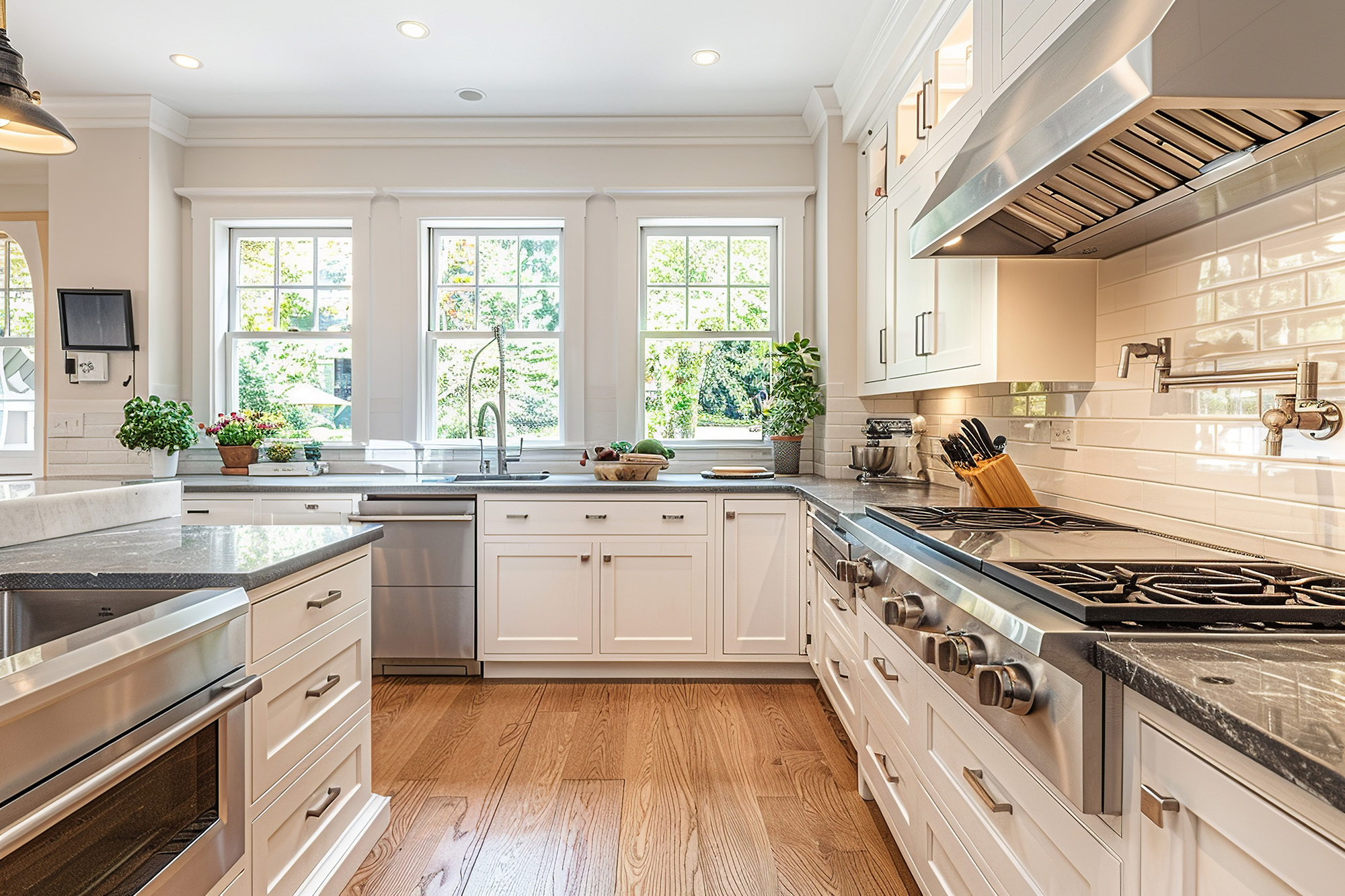
Fredericksburg sits on a mix of caliche and clay heavy soils that behave very differently from the sandy or gravel based ground found in other parts of Texas. These soils expand and contract with moisture changes throughout the year, and that movement transfers into the foundation slab in ways that can affect flooring long before it affects anything else in the home.
Kitchens tend to show this first, partly because tile and hard flooring reveal small slab movements more visibly than carpet does, and partly because kitchens often sit over long unbroken slab runs where any shift is easiest to notice. Understanding what is happening underneath the floor helps you choose a flooring product that will actually hold up rather than crack or gap within a few years.
How Caliche and Clay Soils Behave Differently From Sand or Gravel
Caliche is a hardened, calcium carbonate rich soil layer common across the Hill Country, and it behaves almost like poorly cured concrete underground, expanding and contracting with seasonal moisture more than people expect from something so hard. Clay pockets mixed into that caliche layer make the movement even more pronounced, since clay is one of the most reactive soil types when it comes to absorbing and releasing water.
During wet stretches, these soils swell and can push up slightly under sections of a foundation, while extended dry spells cause the same soil to shrink and pull away, sometimes leaving small voids beneath the slab. This cycle repeats every year to some degree, and older homes in Fredericksburg often show the cumulative effect of decades of this movement in ways that newer construction has not experienced yet.
Why Kitchen Floors Show the Effects First
A kitchen slab typically runs continuously under cabinets, an island, and open floor space without many interior walls to help distribute structural load, which makes it more sensitive to any differential movement in the soil below. When one section of the slab shifts slightly relative to another, that stress shows up as hairline cracks in grout lines, slightly uneven transitions between rooms, or gaps opening at baseboards near the kitchen.
Hard, rigid flooring materials like traditional ceramic tile telegraph this movement most visibly, since a rigid grid of tile has very little give when the slab beneath it shifts even a small amount. This is exactly why the flooring category you choose for a kitchen in this soil type matters more than it would in a region with more stable ground conditions.
Choosing Flooring That Tolerates Minor Slab Movement
Rigid core waterproof flooring, often installed as a floating floor rather than glued directly to the slab, handles minor substrate movement far better than fully rigid tile because the floating installation allows the material to flex slightly without transferring stress into visible cracks. This makes it a strong option for Fredericksburg kitchens sitting on caliche and clay soils, particularly in homes that have already shown some evidence of slab movement elsewhere.
If tile is still the preferred look, choosing a larger format with a crack isolation membrane installed underneath significantly reduces the risk of grout line cracking compared to installing tile directly over a bare slab. Either approach costs a bit more in preparation than a straightforward installation, but that preparation is exactly what prevents callbacks a year or two down the road.
Foundation Maintenance Habits That Protect Your Flooring Investment
Keeping soil moisture around the foundation as consistent as possible throughout the year reduces the extreme swelling and shrinking cycles that cause the most flooring damage. This usually means running soaker hoses along the foundation perimeter during dry summer stretches and making sure drainage carries water away from the slab rather than pooling near it after heavy rain.
Gutters, downspout extensions, and proper grading around the home all play a bigger role in flooring longevity than most homeowners assume, since they directly control how much moisture the soil beneath the slab experiences season to season. A home with consistent foundation moisture management will generally see far less flooring movement over time than one where soil conditions swing to extremes every year.
Planning Flooring With Top Notch Cabinets and More for Fredericksburg Soil Conditions
Top Notch Cabinets and More has installed flooring across Fredericksburg, Kerrville, Comfort, Johnson City, and Llano, TX long enough to know which Fredericksburg neighborhoods tend to show more soil movement than others, and that experience shapes which products get recommended for a given home. Rather than defaulting to one flooring line for every project, our team looks at the age of the slab, any visible history of movement, and how the space is used before making a recommendation.
If you are planning new flooring anywhere in Fredericksburg or the surrounding Hill Country and want a product chosen with your actual soil conditions in mind, contact us to schedule a walkthrough. Visit Fredericksburg, TX to see flooring options built to handle the ground conditions specific to this region.