


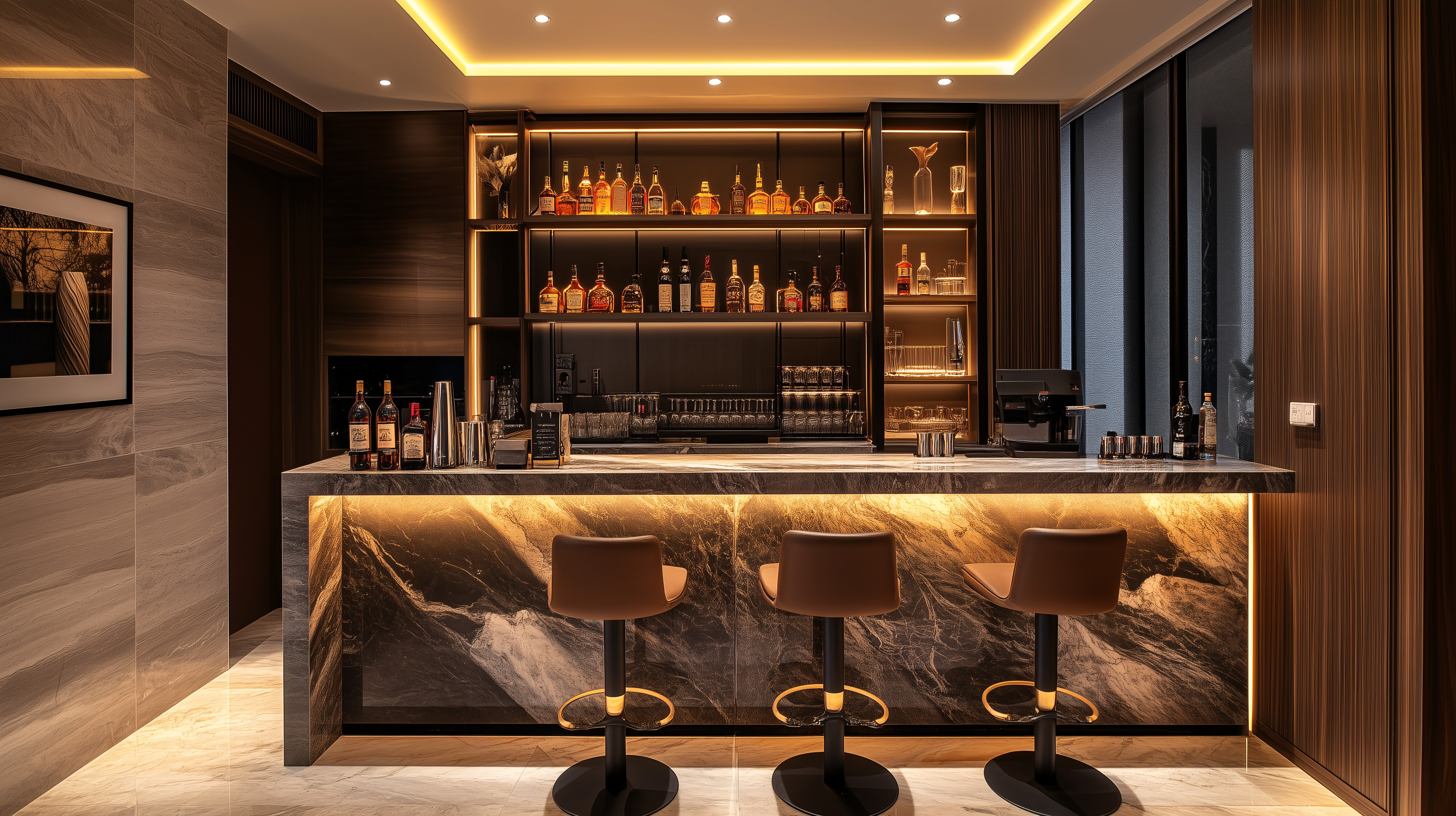
Gillespie County has turned into one of the fastest growing wine regions in Texas, and a lot of that growth is happening in people's backyards. Homeowners along the 290 corridor are adding tasting rooms, converting garages into cellars, and building dedicated spaces for entertaining guests around a pour. Flooring is usually an afterthought until the first spilled glass of tannat soaks into an unsealed surface.
A wine cellar or tasting room is not a wine closet with a fancy label. It is a room that needs to manage humidity, resist staining, and look good enough to be part of the experience you are selling or sharing. Getting the floor right from the start saves you from a redo three years down the line.
Why Wine Cellars and Tasting Rooms Need a Different Flooring Approach
A cellar built for proper wine storage runs cooler and more humid than the rest of the house, often sitting between 55 and 65 degrees with humidity levels well above what standard flooring adhesives and cores are rated for. That constant moisture load is what causes some flooring products to cup, swell, or delaminate within a couple of years, even when they look fine on install day.
Tasting rooms face a different but related problem. Guests are standing, pouring, and occasionally dropping glassware, so the floor needs to handle liquid spills instantly without staining and needs enough traction to keep people upright on tile or stone lookalikes. Choosing one flooring category for both spaces usually means compromising on one of these requirements.
Moisture and Temperature Swings in Underground and Partially Below Grade Spaces
Many Gillespie County cellar additions are built partially below grade or against a slab that sits close to the water table, especially on properties near creek bottoms. That proximity means moisture can migrate up through the slab even with a vapor barrier in place, which is exactly the scenario that ruins traditional wood flooring and some laminate products over time.
A fully waterproof core handles this kind of ambient moisture without warping, because there is no wood fiber in the plank to absorb it. This matters more in a cellar than almost anywhere else in the house, since the whole point of the room is to maintain a stable, moisture rich environment for the wine itself.
Comparing Waterproof Core Materials for Cellar Conditions
Rigid core vinyl products, often labeled SPC or WPC, are built with a stone or wood composite core that stays dimensionally stable even in constant humidity. They also come in finishes that mimic stone, aged wood, or concrete convincingly enough to match a tasting room aesthetic without looking like a compromise.
Porcelain tile is the other strong option for these spaces, particularly in a below grade cellar where long term moisture exposure is a given. It costs more up front and takes longer to install, but it will outlast almost any other material in a room that never really dries out, which makes it worth considering for a permanent cellar rather than a room you might reconfigure later.
Slip Resistance and Foot Traffic in Tasting Rooms
A tasting room floor gets wiped, mopped, and splashed on a regular basis, so slip resistance matters as much as waterproofing. Textured rigid core planks and matte finish tile both perform well here, while high gloss finishes tend to become a liability the moment they get wet.
Foot traffic patterns also matter more than people expect. A tasting room that hosts groups standing near a bar or pouring station will show wear in those specific zones faster than the rest of the room, so it helps to plan flooring direction and transition strips around where people actually gather rather than treating the whole room as uniform traffic.
Working With Top Notch Cabinets and More on a Cellar or Tasting Room Project
Every cellar and tasting room addition has different structural conditions, from slab moisture to ceiling height to how the space connects to the rest of the home. Top Notch Cabinets and More walks through those conditions on site before recommending a product, rather than defaulting to one flooring line for every project across Fredericksburg, Kerrville, Comfort, Johnson City, and Llano, TX.
That same visit is a good time to talk through cabinetry for the space, since a lot of tasting rooms end up with a small bar, storage for glassware, or built in racking that should match the flooring plan rather than get added on afterward.
If you are planning a wine cellar or tasting room addition anywhere in Gillespie County or the surrounding Hill Country, contact us to talk through flooring options that fit the specific conditions of your space. Top Notch Cabinets and More serves Fredericksburg, Kerrville, Comfort, Johnson City, and Llano, TX and welcomes walk ins at Fredericksburg, TX to see waterproof flooring samples in person before you commit to a product.