


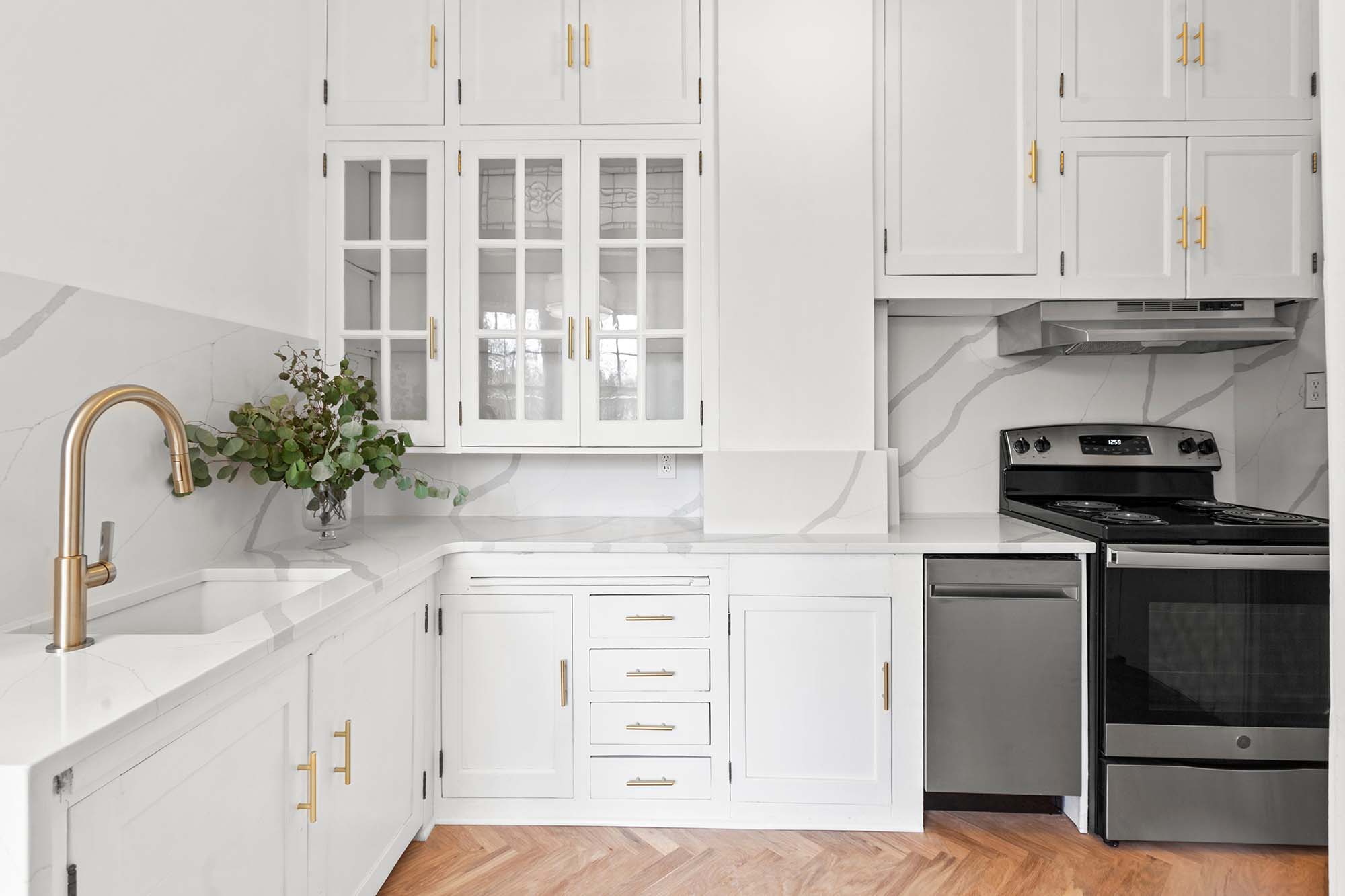
Not every home has a walk-in pantry, and not every kitchen has space to add one. Many older homes, ranch-style layouts, guest houses, and remodeled kitchens in the Hill Country have limited storage because the original floor plan was not built around today’s appliances, bulk shopping, coffee stations, pet food, and entertaining needs.
A full pantry wall can solve that problem without changing the entire footprint of the kitchen. Instead of relying on one small closet or scattered upper cabinets, a pantry wall turns vertical cabinet space into organized storage. With the right mix of tall cabinets, roll-out trays, appliance garages, drawers, and landing zones, it can function better than a traditional pantry.
Start With Cabinet Depth
The first design decision is depth. Standard tall cabinets are often around 24 inches deep, which works well for large items, small appliances, serving pieces, and pull-out storage. The challenge is that deep shelves can become black holes if they are not designed correctly. Items get pushed to the back, expire, and disappear.
Shallow pantry cabinets, around 12 to 15 inches deep, can be excellent for food storage because everything stays visible. Cans, spices, jars, snacks, baking items, and dry goods are easier to see and reach. In many kitchens, the best pantry wall uses a mix of depths. Deeper sections handle appliances and bulky items, while shallower sections handle everyday food.
Tall Cabinets Create the Main Storage System
Tall pantry cabinets can run from floor to near ceiling, depending on the kitchen height. Common cabinet heights include 84, 90, and 96 inches. Taller cabinets make better use of vertical space, but the upper sections should be planned for items that are not used every day.
A good pantry wall should not just be a row of tall doors. It needs zones. One cabinet might hold food, another might hold cleaning supplies, another might store serving pieces, and another might become a coffee or breakfast station. When everything is grouped by use, the kitchen becomes easier to work in because storage supports the daily routine.
Roll Out Trays Fix Deep Cabinet Problems
Roll-out trays are one of the most important features in a full pantry wall. They allow homeowners to use deep cabinets without losing items in the back. Instead of crouching and reaching, the tray slides out so the contents are visible from above and from the side.
For heavy pantry items, roll-out trays need quality hardware. Cheap slides can sag, rack, or feel rough over time. Full-extension slides are usually worth considering because they allow access to the entire tray. In lower pantry sections, roll-outs are especially helpful for pet food, bottled drinks, small appliances, mixing bowls, and bulk items.
Appliance Garages Keep Counters Clear
An appliance garage is a cabinet zone designed to hide small appliances while keeping them accessible. Coffee makers, toasters, blenders, mixers, and air fryers can quickly make a kitchen look cluttered. An appliance garage gives them a proper home without requiring homeowners to lift them in and out of a lower cabinet every day.
The key is planning power and clearance correctly. Some appliances need ventilation, height clearance, and safe access to outlets. Electrical work should be handled by a qualified professional, especially when outlets are installed inside cabinetry. The appliance garage should also have a practical door style. Pocket doors, lift-up doors, or tambour-style doors can work depending on space and budget.
Add Drawers for the Items That Never Stack Well
Not everything belongs behind a tall door. Drawers are useful for snacks, wraps, lunch supplies, tea, coffee pods, baking tools, linens, and smaller kitchen items that get messy on shelves. A pantry wall with only doors can still become cluttered if small items do not have the right storage format.
Drawers also make the pantry wall feel more like part of the kitchen instead of a storage closet. They create horizontal breaks, improve access, and allow the design to look intentional. For a cleaner look, homeowners can use a combination of tall cabinet doors, drawer banks, and one central counter zone.
Leave a Landing Zone If Space Allows
A small counter area inside the pantry wall can make a huge difference. It can become a coffee station, baking prep spot, charging area, or grocery unloading zone. Even a modest countertop section gives the pantry wall more function than a standard cabinet run.
This landing zone works especially well near the refrigerator or kitchen entry. Groceries can be set down and sorted quickly. Coffee supplies can stay in one area. Breakfast items can be grouped together. The result is a kitchen that feels easier to use because the pantry wall supports routines instead of simply storing things.
A full pantry wall is one of the smartest upgrades for a kitchen without a walk-in pantry. By combining tall cabinets, shallow storage, roll-out trays, drawers, appliance garages, and a practical landing zone, homeowners can create more storage without making the kitchen feel crowded.
For custom pantry wall cabinets, cabinet planning, and flooring support in Fredericksburg, visit Fredericksburg, TX. Top Notch Cabinets and More serves Fredericksburg, Kerrville, Comfort, Johnson City, and Llano, TX with practical cabinet and flooring solutions for kitchens that need to work harder. Contact us to plan a pantry wall that keeps food, appliances, and daily clutter organized without a major footprint change.