


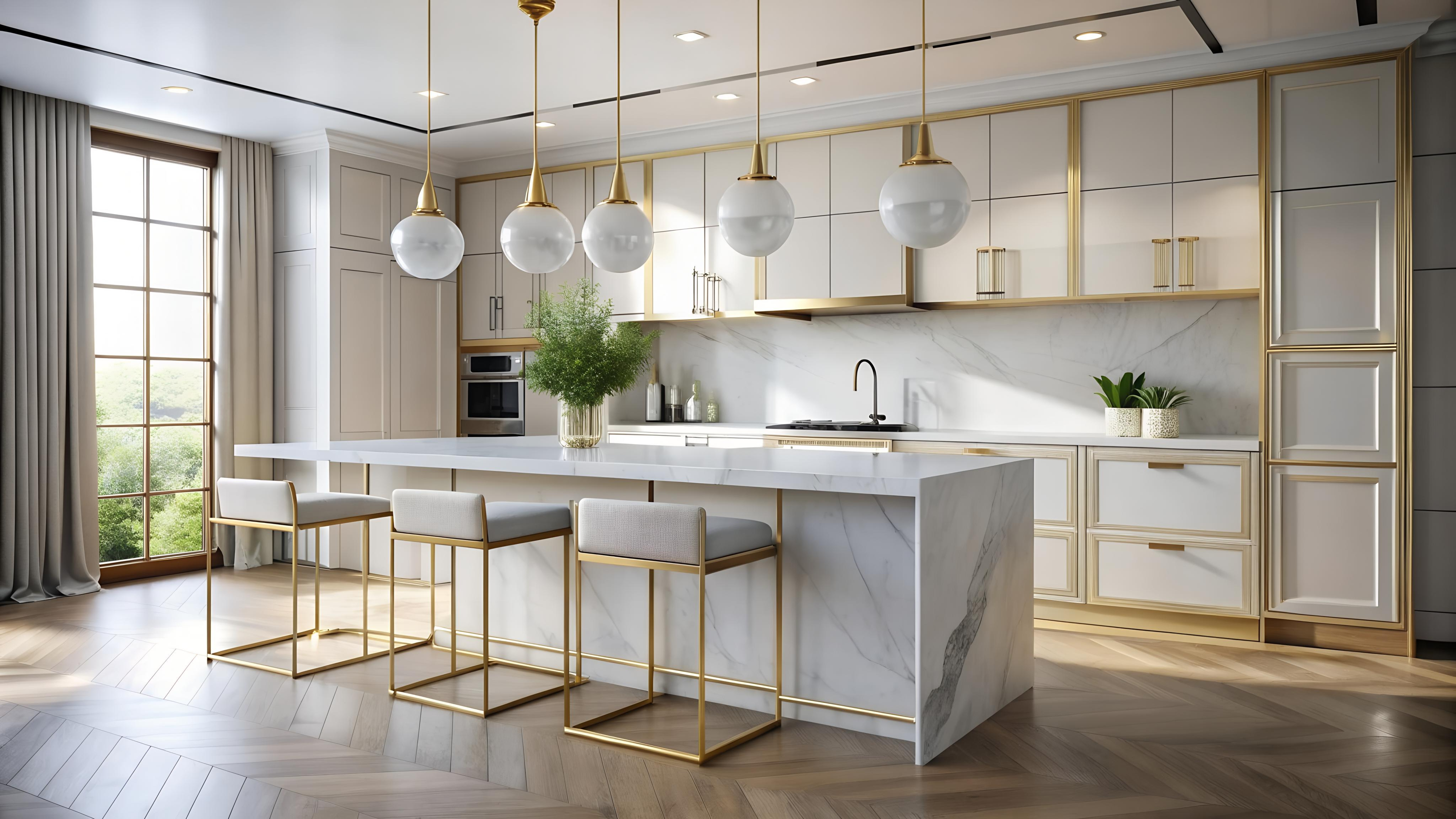
“Gold hardware” is one of the most searched-and-bought kitchen details right now, but it’s also one of the most misunderstood. Two pulls can look identical in a photo and age completely differently in your actual home. In the Hill Country, the mix of strong sunlight, heat cycling, humidity swings, and frequent cleaning can accelerate finish change. If you’re planning new cabinets or upgrading hardware, this is the technical guide you want before you commit.
The big truth: color is not the material
When a listing says “brass,” it can mean:
Solid brass (the metal itself is brass through and through)
Brass-plated (a thin brass layer over another metal)
Brass-toned (a gold-colored coating over zinc or stainless)
Why it matters: solid brass can be refinished and will patina naturally. Plated or coated finishes can chip, wear through, or change color unevenly if the protective layer fails.
Patina vs “forever” finishes: what you’re actually choosing
Patina is oxidation and surface change that happens when metal reacts with air, moisture, skin oils, and cleaners. Some people love it because it looks lived-in and warm. Others want day-one perfection forever.
So your choice isn’t “brass or not.” It’s this:
Do you want controlled aging (patina that looks intentional)?
Or do you want stability (color that stays consistent under use)?
There’s no wrong answer, but there is a wrong finish for your expectations.
PVD: the most durable “forever gold” option (when done correctly)
PVD stands for Physical Vapor Deposition. It’s a vacuum deposition process that creates a very hard, thin coating bonded to the substrate (often stainless steel or brass).
Why PVD wins in real kitchens:
High resistance to scratching compared to many lacquers and electroplated finishes
Better resistance to corrosion and chemical exposure
More stable color over time with normal cleaning
Technical watch-outs:
“PVD” gets used loosely in marketing. True PVD is a process, not just a color.
PVD over a poor base metal or weak prep can still fail at edges and high-contact areas.
The first wear zones are typically the underside of pulls (finger contact) and edges (rings, keys, cleaning cloth abrasion).
Best use case: High-traffic kitchens, rentals, and anyone who wants gold without a “changing finish” story.
Lacquered brass: beautiful, but it has a maintenance timeline
Lacquer is a clear protective topcoat applied over brass (or a brass-toned surface). It’s often used to preserve a bright, uniform appearance.
How it fails:
Heat and UV can degrade lacquer over time, leading to clouding, micro-cracking, or edge breakdown.
Once the lacquer is compromised, moisture and oils creep underneath, and the finish can change unevenly.
Best use case: Lower-touch areas, or homeowners who are okay with eventual re-lacquering or natural aging once the coating thins.
Electroplated “gold” finishes: good when thick, fragile when thin
Electroplating deposits a metal layer (or alloy) via an electrical process. Quality depends heavily on:
Thickness of the plating
Base metal quality
Surface prep and sealing
What homeowners notice:
If plating is thin, it can wear through at contact points and corners.
Tone can shift over time depending on exposure and cleaners.
Best use case: Mid-range projects when you choose reputable hardware and avoid harsh cleaning chemicals.
Living in Texas: what UV, heat cycling, and cleaners do
Sunlight and heat: Even “indoor” hardware gets UV if your kitchen has strong window light. UV plus heat cycling stresses clear coats (like lacquer) and can accelerate fading or uneven toning on some finishes.
Humidity swings: Not coastal-level corrosion, but enough to matter when protective coatings are breached.
Cleaners: This is where most finishes die early.
Avoid:
Abrasive powders
Degreasers with strong solvents
Bleach-based sprays
Rough scrub pads
Use:
pH-neutral soap and water
Soft microfiber cloth
Immediate drying, especially around sink zones
Practical selection guide: what to pick based on your lifestyle
If you want consistent “gold” for years:
Choose a true PVD “champagne/modern brass” style finish from a reputable line.
If you want warmth and character:
Consider unlacquered brass or a “living finish” designed to patina evenly.
If you’re sensitive to fingerprints:
Brushed or satin textures hide oils better than high-gloss.
If your kitchen is heavy-use (kids, entertaining, rentals):
Prioritize durability over rarity. Hardware is the most touched object in your kitchen.
The “looks expensive” rule most people miss: match undertones
Brass tones are not one color. Your cabinets, lighting temperature, and counters can pull hardware warmer or greener.
Warm whites and woods often love champagne/soft brass.
Cool whites and gray stones can make some brasses look yellow. A slightly muted tone performs better.
If you’re investing in cabinets and hardware, pick the finish that survives your actual habits and your home’s conditions. If you want help selecting hardware that complements your cabinetry and holds up in real Hill Country life, contact Top Notch Cabinets and More or visit the Fredericksburg showroom to compare finishes in person. We serve Fredericksburg, Kerrville, Comfort, Johnson City, and Llano, TX, and we can help you build a kitchen that still looks right after thousands of daily touches. Call (830) 992-3449 or stop by 1318 S State Hwy 16 Unit D, Fredericksburg, TX 78624.